Manual Lathe & Mill
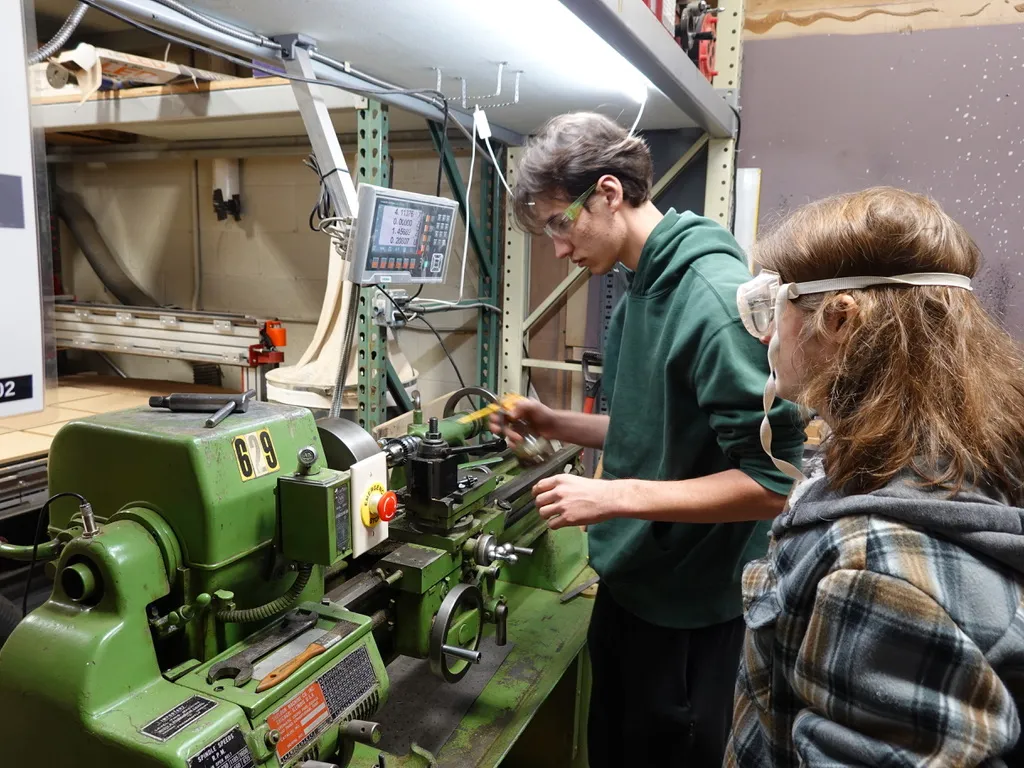
Manual machining is where machinists learn to think. Before any CNC machine can be trusted, a machinist needs to understand what the cutting tool is doing and why, and that understanding starts at the manual lathe and knee mill.
The lathe rotates stock about its central axis while a stationary cutting tool removes material. It's the machine for all cylindrical work: shafts, axles, spacers, and any part with a round cross-section. The operator controls depth of cut, feed rate, and tool position by hand using precision lead screws.
Operations
- Turning: reducing stock diameter to a precise dimension
- Facing: cutting the end of a part flat and square
- Boring: enlarging or finishing an existing hole
- Threading: cutting external or internal screw threads
- Parting: cutting a finished piece off the stock
- Knurling: applying a textured grip pattern
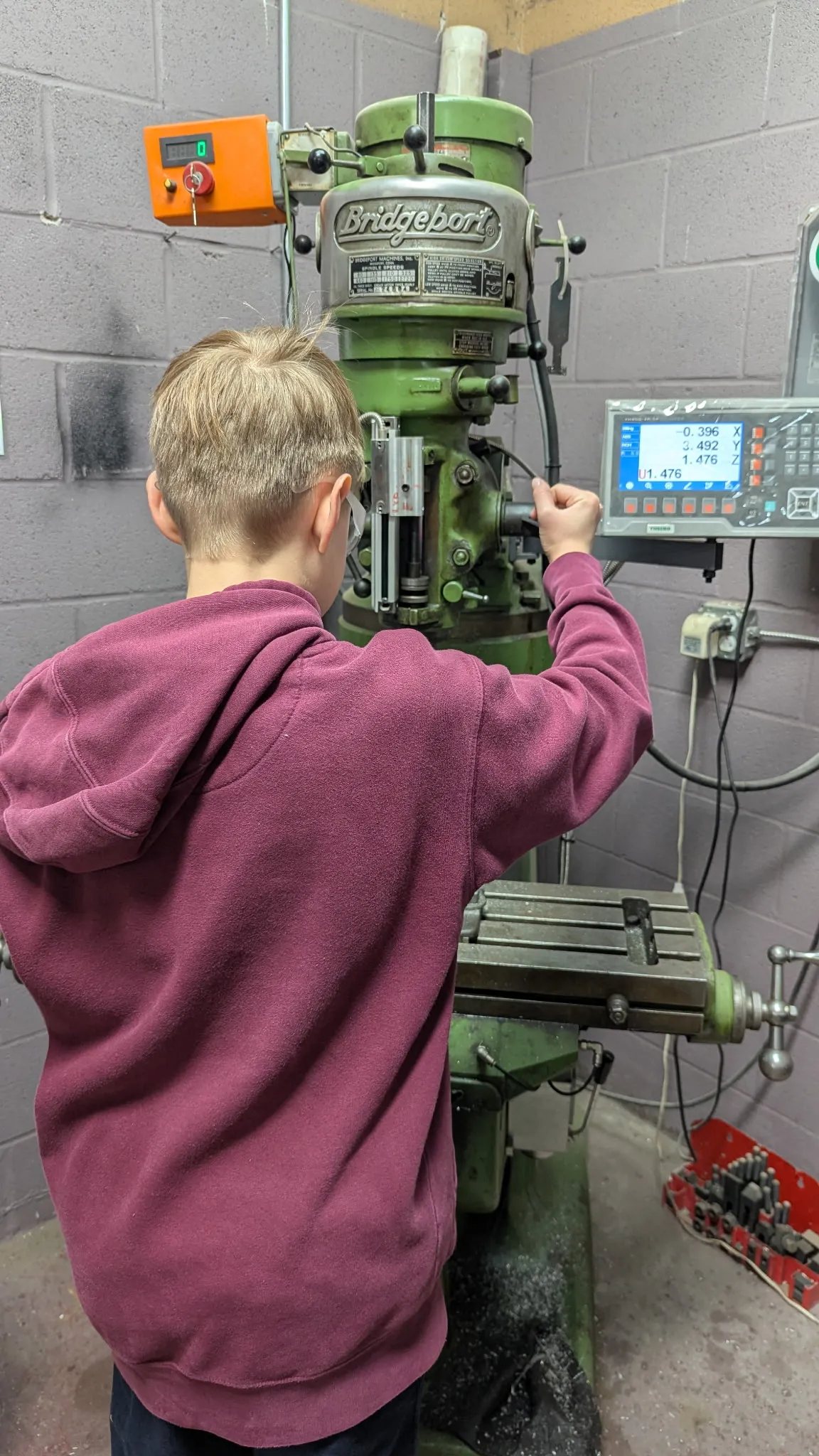
The knee mill holds stationary work while a rotating cutter moves through it. It produces flat surfaces, slots, pockets, and precision holes in stock of almost any shape. The operator positions the workpiece on three linear axes and controls depth and feed by feel and measurement.
Operations
- Face milling: creating a flat reference surface
- Squaring stock: bringing all faces square and to dimension
- Drilling and reaming: precise hole placement and finishing
- Slot milling: cutting keyways, T-slots, and pockets
- Contour milling: following a profile with an end mill
- Boring with a boring head: finishing precision hole diameters
What Students Learn
- Reading and interpreting machinist drawings with tolerances
- Measuring with micrometers, calipers, and dial indicators
- Workholding: 3-jaw chuck, 4-jaw chuck, collets, vise, and fixtures
- Selecting and setting cutting speeds and feeds
- Tool geometry: how cutting edge angles affect the cut
- Coolant use and chip management
- Safe operation: chip guards, never leave the machine unattended, clothing rules
- Understanding how manual skills underpin all CNC programming
Robotics Applications
- → Precision shaft turning for axles, hubs, and standoffs
- → Custom spacers machined to exact length for drivetrain geometry
- → Boring out bearing pockets to precise press-fit tolerance
- → Tapping threads in aluminum parts for secure fastener engagement
- → Squaring aluminum stock for fixture-quality reference surfaces
- → One-off repairs and custom parts during competition season
Why Manual Machining First?
Manual machines make the cutting process transparent. Students develop an intuition for what feeds and speeds feel right, what a properly formed chip looks like, and when something is wrong. This intuition makes them dramatically better at CNC work because they understand what the machine is doing, not just what buttons to press.
Want to Use This Equipment?
Join FutureForward and get hands-on access to our full fabrication shop from day one.
Apply Now