Mechanical Engineering
Build things
that move.
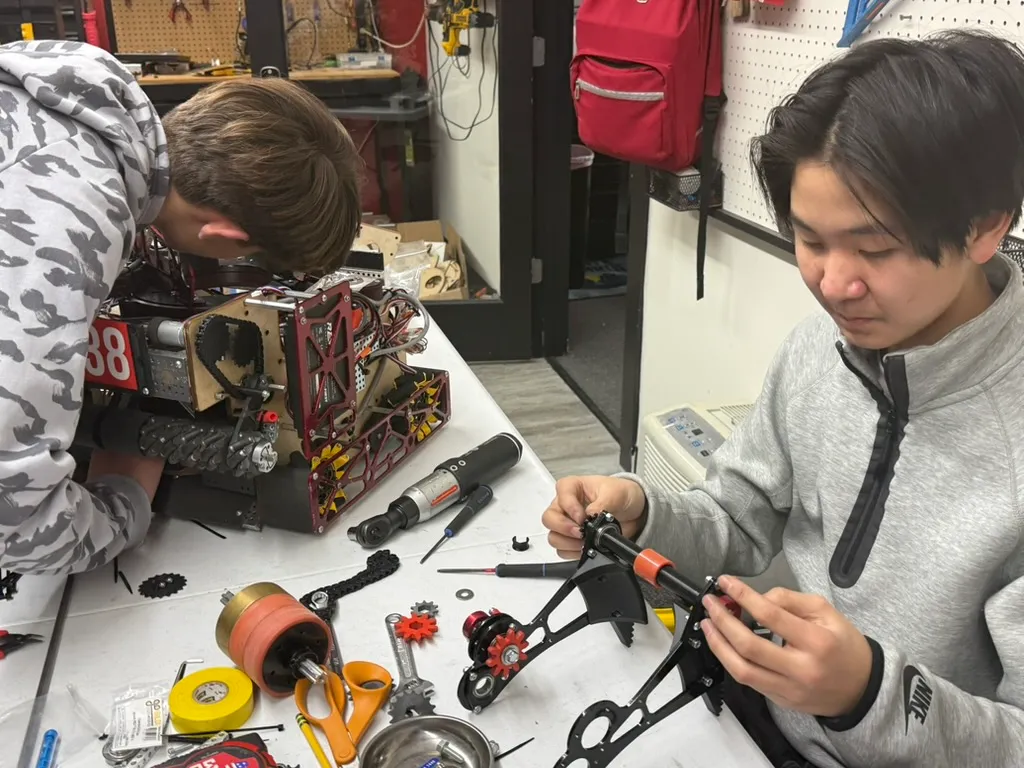
From sketch to CNC-cut aluminum, mechanical students design, fabricate, and assemble real robot hardware using the same tools as professional engineers.
01 / CAD & Design
Onshape. Parametric modeling. From sketch to finished part.
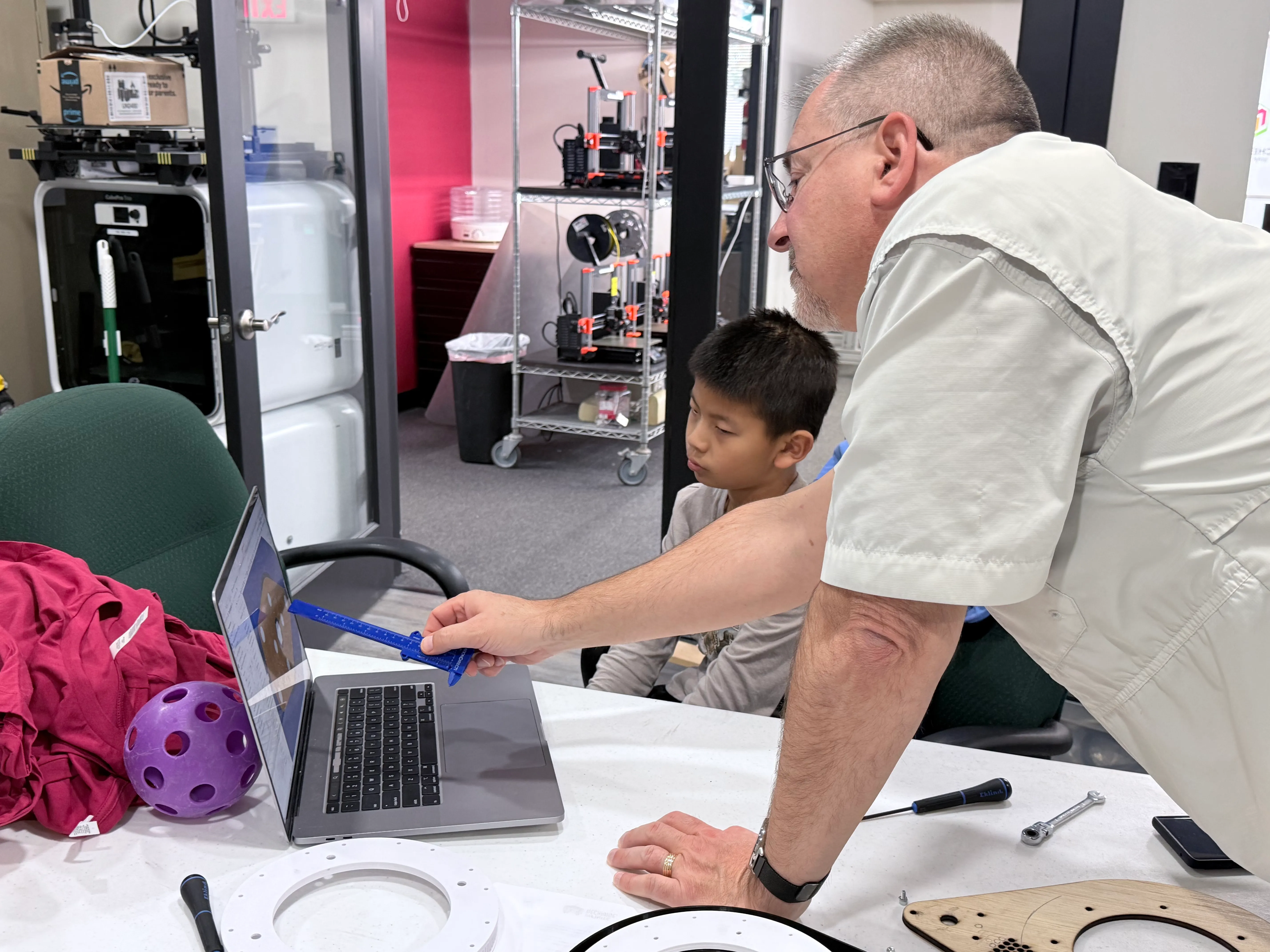
Before any material is touched, every robot part lives as a precise 3D model in Onshape. Students learn parametric CAD from scratch, starting with how to constrain a sketch, building models that update intelligently when a dimension changes, and creating assemblies that reflect how parts actually fit together.
Good CAD is engineering judgment made visible. Students learn to think about manufacturing as they design: why a fillet improves fatigue life, how a tolerance stack determines whether a shaft fits its bearing, and what design intent means when a teammate opens the file three months later.
02 / Fabrication & Manufacturing
Seven machines. Real materials. No shortcuts.
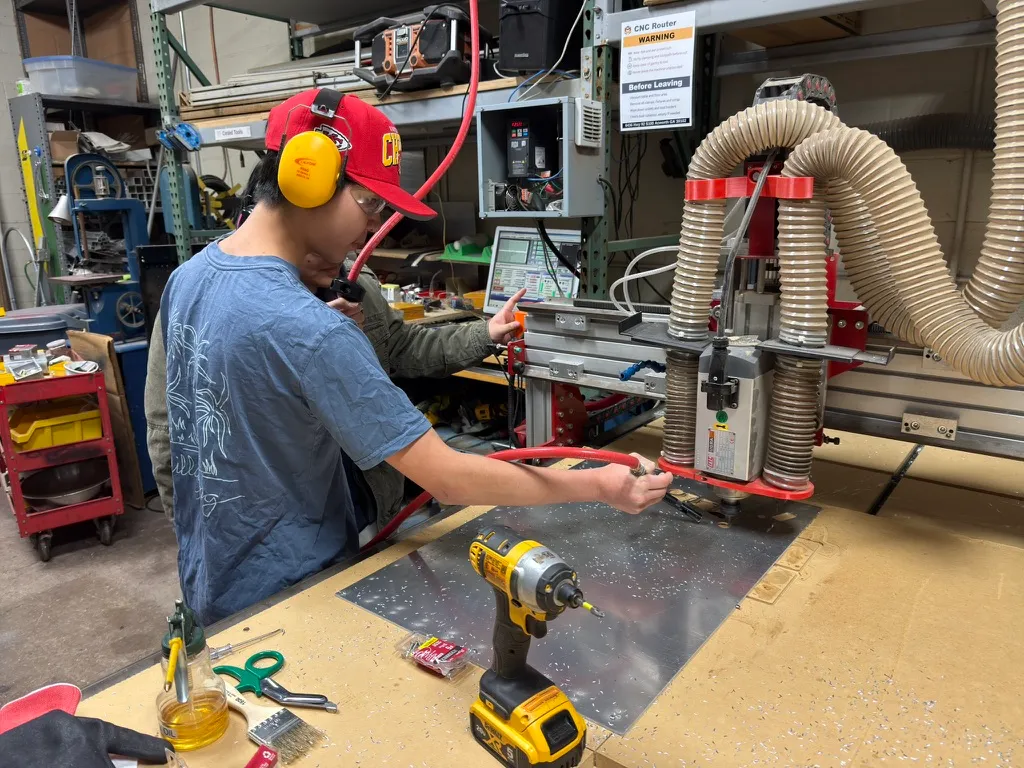
The shop is where engineering decisions get tested by reality. Students work across all seven fabrication machines: laser cutter, CNC router, Formlabs SLS and SLA printers, waterjet, plasma cutter, and manual lathe and mill. They learn not just how to operate each one, but when to reach for it.
Fabrication teaches what no textbook can. How aluminum deflects under load. How kerf affects a press-fit joint. How SLS nylon compares to FDM PLA in a high-stress bracket. These are lessons learned through making real parts and discovering where the design fell short.
03 / Assembly & Systems Thinking
From 200 parts to one working robot.
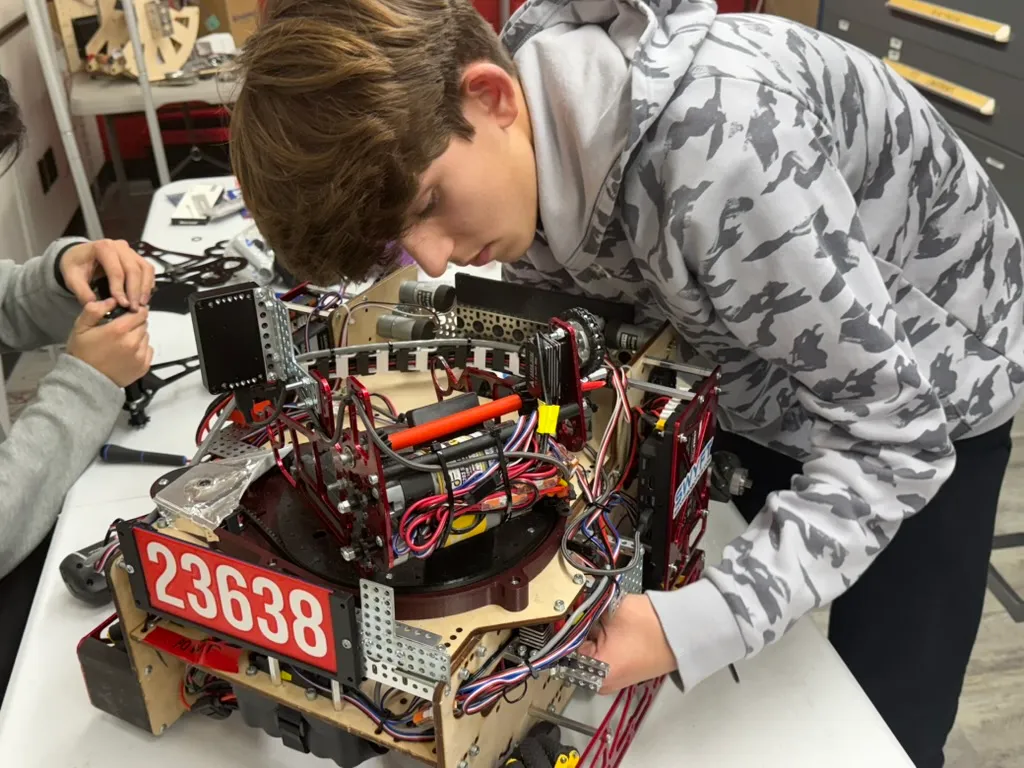
Individual parts do not win competitions. Systems do. Students learn to think beyond isolated components: how a drivetrain's wheel spacing affects turning radius, how arm geometry determines the torque a servo must produce, how an intake mechanism interacts with the robot's center of mass.
Assembly is where mechanical engineering becomes systems engineering. Students debug failure modes under real time pressure, learning to distinguish a fastener problem from a geometry problem. That diagnostic skill transfers to any engineering discipline.
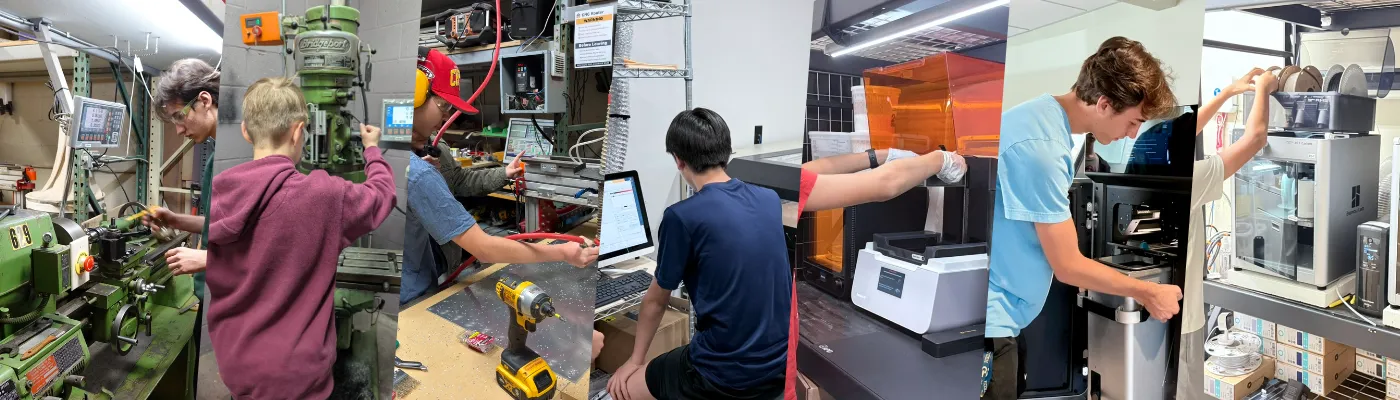
Our Shop
Industry-grade equipment.
Students work with professional tools from day one. Every machine has a dedicated page covering what it is, what students learn, and how it's used in competition robots.
Fabrication
CNC Laser Cutter
Vector & raster cutting of acrylic, plywood, and polycarbonate. Students learn design-to-machine workflow.
Learn more3D Printing
FDM 3D Printers
Multiple FDM units for rapid prototyping. PLA, PETG, and TPU. CAD to physical part in hours.
Learn moreSLA Resin
Formlabs Form 3
High-accuracy resin printing for detailed, smooth-surface parts. Tolerances tighter than FDM.
Learn moreSLS Nylon
Formlabs Fuse 1 & 1+
Powder bed fusion for functional, support-free parts in PA-12 Nylon and flexible TPU.
Learn moreCNC Machining
Avid CNC Router
4×8 ft 3-axis router for full-sheet aluminum and wood cuts. Students program CAM toolpaths.
Learn moreMetal Cutting
CNC Plasma Cutter
High-speed CNC plasma for cutting steel and aluminum plate. Students learn DXF prep and metal safety.
Learn moreWaterjet
Wazer Waterjet
Desktop waterjet cuts metal, ceramic, glass, and composites with water and abrasive garnet.
Learn moreManual Machining
Manual Lathe & Mill
Engine lathe and knee mill for turning, facing, milling, and drilling. Builds the fundamentals behind all CNC work.
Learn moreReady to get your hands dirty?
Join FutureForward and start building real robots with real equipment. Limited spots per season.