CNC Laser Cutter
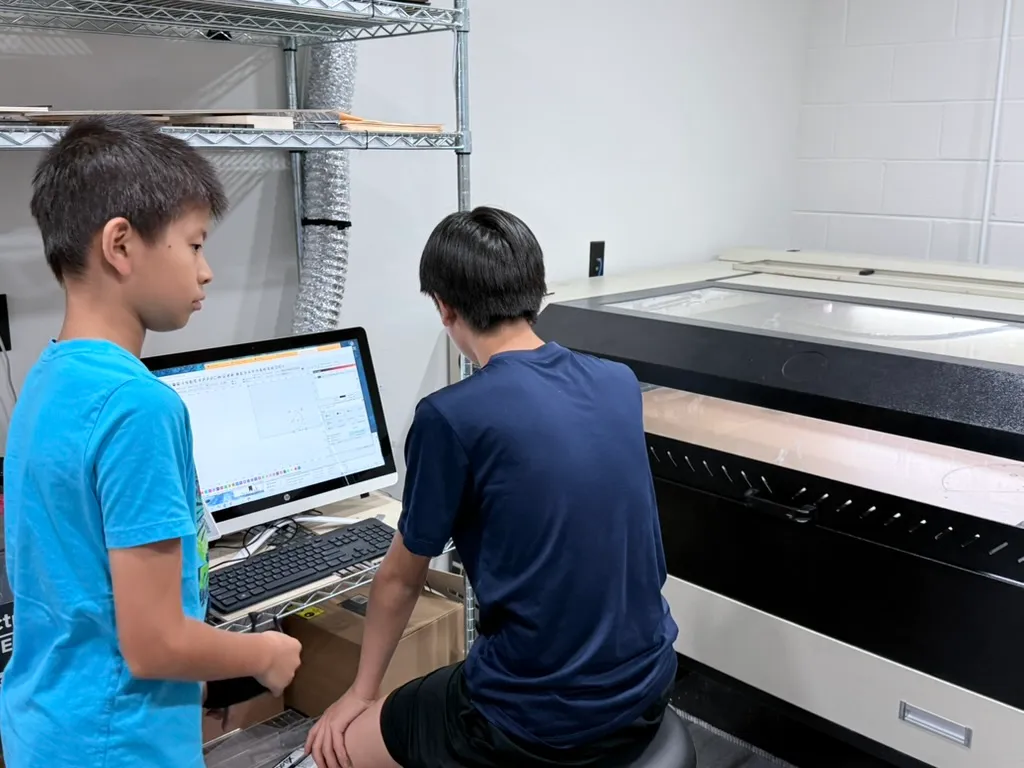
A CO₂ laser cutter is one of the fastest ways to get from a vector drawing to a finished part. Students use it to cut chassis plates, brackets, and custom panels from acrylic, polycarbonate, and wood, often within minutes of completing their CAD design.
About the Machine
CO₂ laser cutters work by focusing an infrared laser beam to a fine point that vaporizes material along a programmed vector path. Unlike mechanical cutters, there's no tool wear and no clamping required; the laser simply follows the design file.
The machine operates in two modes: vector cutting follows lines to cut through or score materials, while raster engraving sweeps back and forth line-by-line to burn surface detail. Both modes are useful for robot fabrication.
Specifications
- Process CO₂ laser (vector cut & raster engrave)
- Materials Acrylic, plywood, polycarbonate, MDF, leather
- Max Material Thickness ~¼ in (varies by material)
- Typical Tolerance ±0.005 in
What Students Learn
- Vector design for laser cutting (DXF, SVG)
- Kerf compensation and tight-fit joinery
- Machine setup: focus height, power, and speed settings
- Material selection and cutting characteristics
- Raster engraving for labels and reference marks
- Safe operation: fume extraction, fire watch, material restrictions
Robotics Applications
- → Custom chassis plates cut from polycarbonate or plywood
- → Acrylic side panels and structural brackets
- → Engraved reference marks for accurate assembly
- → Rapid proof-of-concept parts before CNC routing in aluminum
- → Custom team logos and field element mockups
Want to Use This Equipment?
Join FutureForward and get hands-on access to our full fabrication shop from day one.
Apply Now